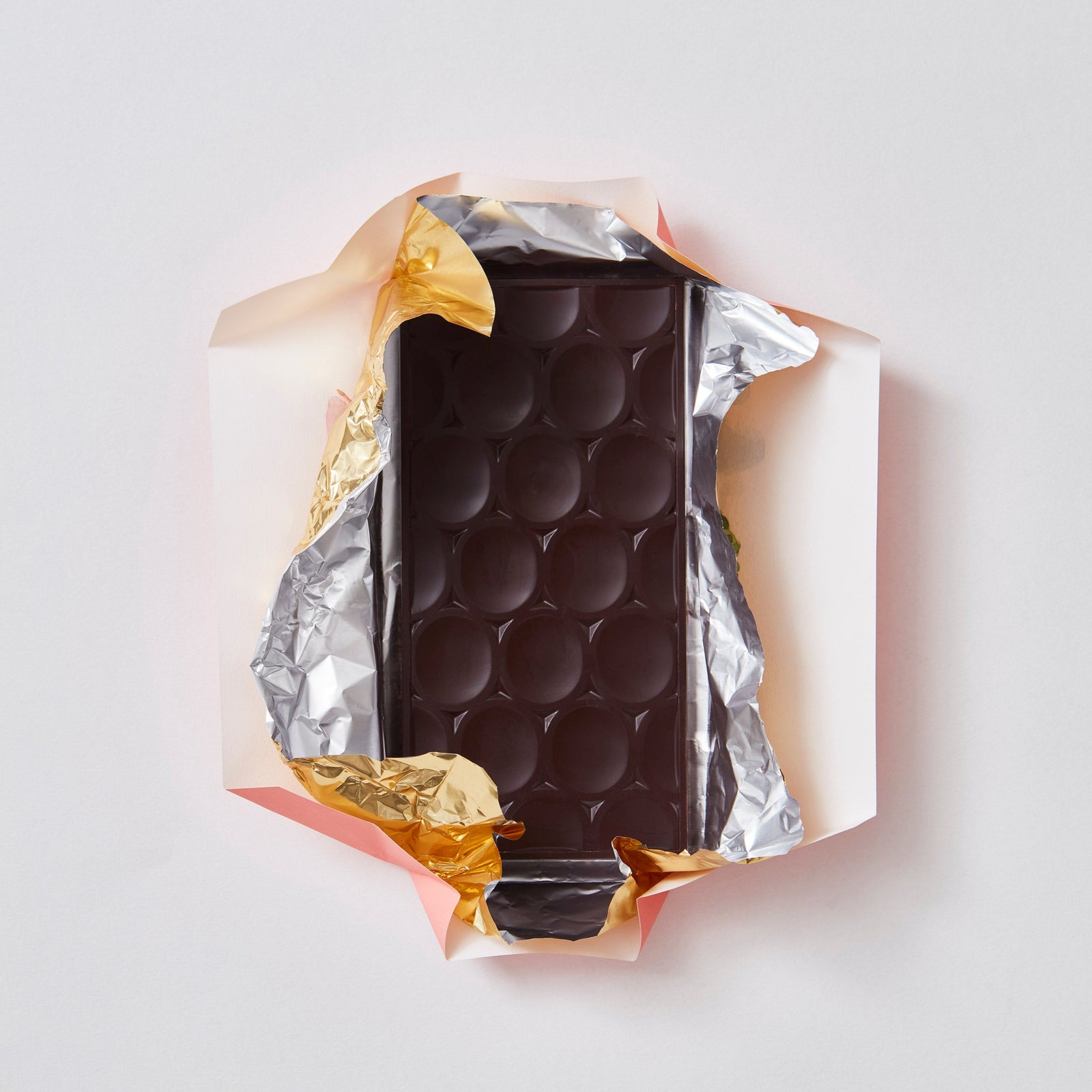


At Pump Street, we can think of almost nothing better than cracking open a few bars of chocolate with friends. A chocolate tasting is the a great way of hosting a fun get together, and can be done with as much or as little ceremony as you choose. Here are our guidelines to throwing your own:
First, there's the purist version. Think a bit like what we do when we are tasting chocolate professionally.
This is where you, the host, take on the mantle of guiding your guests through a rigorous afternoon or evening of chocolate eating. The chocolate is very much the main event here, and there’ll be a degree of seriousness to the proceedings. You’ll want to keep everyone on the same sample, take notes, steer talk towards what people are tasting, and put thought into what you serve alongside the chocolate so that it doesn't compete with the chocolate. Still water and plain crackers are the ideal pairing for the chocolate part of the event (but you can obviously add more food or drink before or after!)
The second version is altogether less strict.
This will be more your sort of evening if you like the idea of incorporating a tasting into a relaxed, casual get together. Margaritas, wine, water - here your guests drink and eat what they like, however, with the trade-off that some of the chocolate’s subtler flavours may get lost along the way. We still have some firm recommendations on what not to serve (like spicy food…more on this later), but in general, you won't need to be as deliberate over everything that goes on the table.
Comparison is what makes a tasting really interesting. One chocolate bar on its own can be excellent, but put it beside a flight of five others and suddenly everyone has something to say…this one's fruitier, that one's very melty, this one somehow tastes of golden syrup…
We’d suggest five or six different bars for an evening totally centred on tasting. That gives you plenty to discuss and room to go back to a favourite. Three could perhaps be enough for a much shorter tasting after dinner, but no less than this.
Within your selection, build in some contrast. A milk chocolate, a darker bar in the high seventies or beyond, a few different origins. That gives you plenty to taste and talk about.
To invite closer comparison, you could even include two bars with something in common. Two makers might use cocoa from the same farm and both settle on a percentage around 70%, yet produce quite different chocolate. Taste them side by side and see how far that apparent resemblance goes. Or try a dark and a milk chocolate made by the same maker using the same beans. Will you be able to recognise anything of one in the other? A pair like this gives everyone something to investigate, and you something to look for when choosing the bars.

You can buy the selection yourself, which gives you complete control over the range and running order. Or, if six people are coming, you can ask your guests to each bring a bar. Give everyone a small brief - like something milk, something dark, something with an added inclusion or ingredient - so you don’t end up with six variations on the same chocolate. This spreads the cost and usually turns up something nobody’s tried before.
Cocoa Runners, friends of ours, are a great place to start. They stock bars from small makers around the world, giving you plenty of scope to put together a varied selection. We’d also slip in one of our own bakery series bars for extra intrigue.
For quantities, allow roughly 5g of each chocolate per person for a first taste, with extra for going back. A 70g bar of each kind gives six people enough to try everything twice. For a dozen, buy two of each.
A little theatre in how you lay out the chocolate can make it feel like a proper occasion.
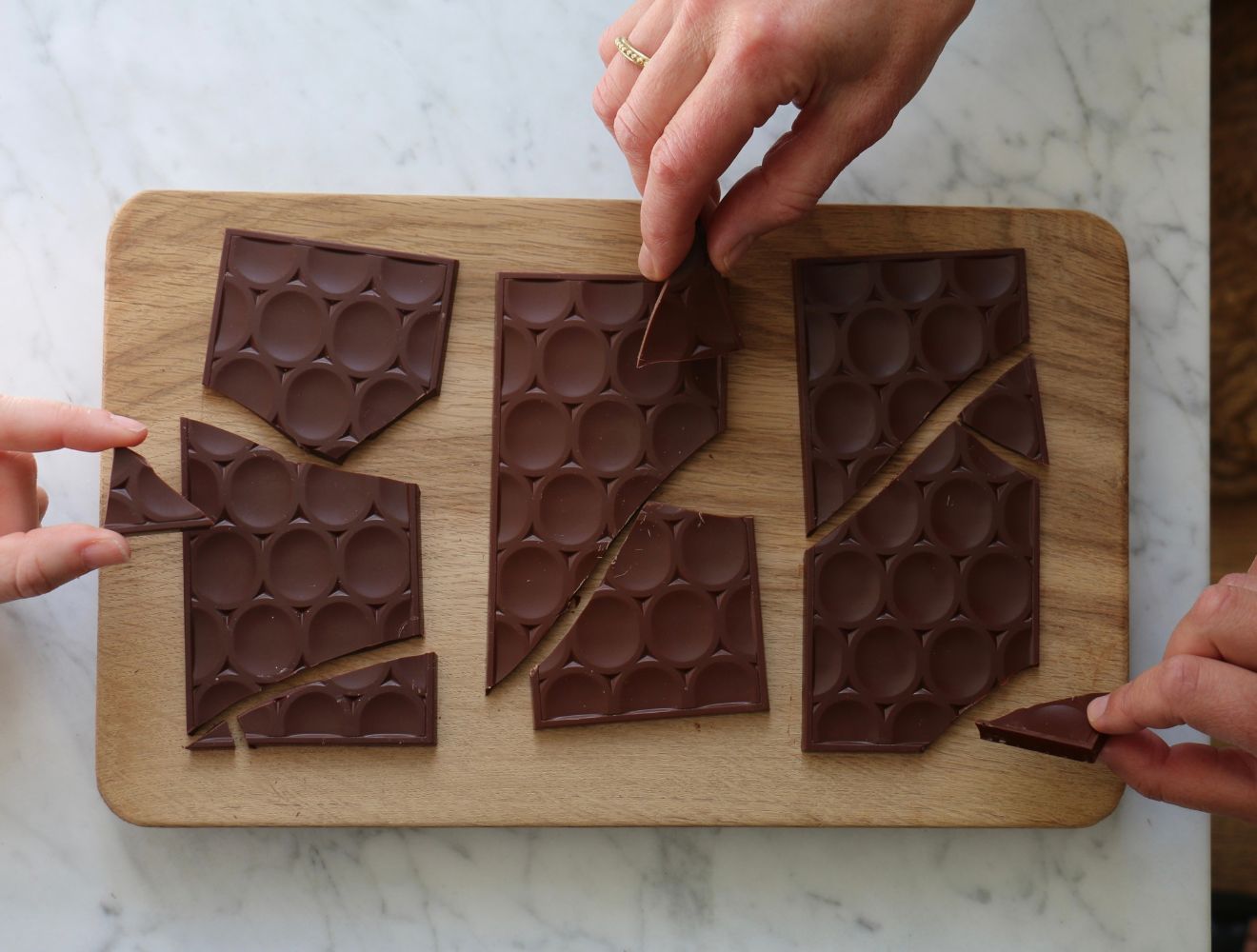
Set out a plate for each bar, glasses and a jug of water, with paper and pencils if people want to make notes. Break the bars into small pieces and keep each kind separate. If you’re lighting candles, choose unscented ones.
For a blind tasting, label the plates by number and put the wrappers aside. Keep a note of which is which. Without the name, origin or percentage in front of them, people can make up their minds before reading what they’re supposed to taste. Bring the wrappers out afterwards and match each number to its bar.
Serve the chocolate at room temperature. Keep it in a cool, dry place away from heat and strong smells beforehand; if it has been refrigerated, allow it to come to room temperature, still wrapped, before putting it out.
Then decide on an order. We recommend you start with the darkest, highest-percentage chocolate bars and work down towards the milker ones. It might run against the instinct to save the lower percentage bars for last, but a high-cocoa bar tasted first, on a fresh palate, is the closest thing to pure cacao you'll get, and it gives you a truer reading of everything that comes after, and saves your palate from being overwhelmed by sugar.
The useful thing is to keep everyone tasting the same bar at the same time, with a pause and some water between samples. Leave enough chocolate for people to return to an earlier bar and compare it again.
Encourage people to smell the chocolate before tasting it too, then let it soften and melt in the mouth. Notice the first taste, how it changes, and what’s left once it’s gone. With a bar that contains crumbs or nuts, try a second piece and pay attention to the texture, too.
Ask what it reminds people of. There are no wrong answers! There’s also no need to agree, and no obligation to borrow the tasting notes on the wrapper. The point is to notice more than you would if you’d eaten the same square standing by the cupboard.
For a more formal tasting, give everyone a scoring sheet and compare at the end. Otherwise, a few words on a piece of paper will do, since it will be hard to remember off the top of your head what you thought on bar one when you are on bar five. Ask people to jot something down before the discussion starts, so the first person to announce “toffee” doesn’t decide it for everyone.
A purist would only serve still water at room temperature on the tasting table, along with plain crackers or small pieces of bread for between samples. Coffee to smell can help recalibrate your nose. The crackers can still be good ones (a plain water biscuit, or a good oatcake), we just mean unflavoured, so nothing like mustard, garlic or chilli.
If you are being a little less strict, you might offer little scoops of lemon sorbet between samples as a palate cleanser.
If you do want to give your guests something savoury to eat between all those squares - we’d recommend a cheese board, bread and a little charcuterie. A goat's cheese (we love Ragstone), a hard cheese that has some nutty caramel notes, like Gruyere or Coolea, and a blue - try Stichelton - would be good here.
We'd avoid hot, spicy food while you're tasting, since a hit of chilli will flatten your sense of sweet, sour and bitter. Be sparing too with strongly vinegary things such as pickles.
If there’s some chocolate left over - and there might not be - you may be inclined to save your favourites for savouring later. But if you have more than you want to keep, a good ending for it is a fondue. Melt the odds and ends and let people dip whatever's around, fruit, bread, marshmallows.
And if you think you might do this again (maybe run a monthly chocolate tasting club?) keep a note of the bars and what people made of them. A photograph of the wrappers and a few scribbled favourites are enough to start. You can develop a library of chocolate from previous tasting parties.
We'd love to hear how your tastings are going, and if you need any help or advice, please don't hesitate to get in touch and ask us.
Discover the art of craft chocolate for yourself in our Exploring Craft Chocolate Class.